

AI Development Tools
Lovable Free Plan: What You Get and What You Don't
Understand the free tier constraints before you start building so you can plan your project accordingly.


Senior Software Developer & Trading Technology Specialist
Ethan Parker is a software developer with over 8 years of experience in building web applications, trading tools, and financial technology solutions. He specializes in Python, JavaScript, API integrations, and trading automation, helping traders improve efficiency through innovative technology.
Lovable.dev markets itself as an AI-powered full-stack app builder that turns natural language descriptions into working React applications with Supabase backends. The free tier exists, but understanding what it actually includes requires digging past the marketing language. This article breaks down the current free plan limits, what happens when you hit them, and whether the free tier is practical for real projects or just a demo sandbox.
Contents
- 1. Free Plan Credit Allocation and Reset Schedule
- 2. What a Credit Actually Buys You
- 3. Feature Comparison Across Tiers
- 4. Getting Started on the Free Tier
- 5. Templates and the Free Tier
- 6. Supabase Integration on Free Plan
- 7. Common Free-Tier Workflows That Work
- 8. Workflows That Break on Free Tier
- 9. Promotional Credits and Special Offers
- 10. Comparing Free Tiers Across AI App Builders
- 11. Exporting and Owning Your Free-Tier Code
- 12. When to Upgrade from Free
- 13. Free Tier for Teams and Education
- 14. Technical Limits Beyond Credits
- 15. Final Assessment of Lovable Free Plan
The platform uses a credit system rather than traditional feature gating. Every AI generation, code edit, and deployment consumes credits. Free users receive a monthly allotment that resets each billing cycle. Once exhausted, you wait for the reset or upgrade. This model differs from competitors like Bolt.new or v0.dev, which typically limit project counts or daily messages instead.
As of early 2025, the free plan provides 30 credits per month. A single non-trivial app generation often consumes 5-15 credits depending on complexity. Iterative changes — fixing a bug, adjusting a layout, adding authentication — each cost additional credits. This means a realistic free-tier workflow allows perhaps two to four substantial building sessions per month before hitting the ceiling.
Free Plan Credit Allocation and Reset Schedule
Credits reset on a calendar month basis, not a rolling 30-day window. If you sign up on the 15th, your first reset occurs on the 1st of the following month. Unused credits do not roll over. This matters for project planning because a burst of activity late in the month cannot be supplemented by early next-month credits.
- 30 credits granted on the 1st of each calendar month
- No credit rollover between months
- Credit consumption visible in the dashboard header
- Warning notification at 80% usage
- Hard stop at 0 credits — no overage allowance
The dashboard shows remaining credits prominently. There is no way to earn additional free credits through referrals, community contributions, or social shares as of this writing. Some users report receiving one-time promotional credits during product launches or special events, but these are not reliable for ongoing work.
What a Credit Actually Buys You
Credit costs vary by action type. The platform does not publish a fixed price list, but community testing reveals consistent patterns. Understanding these helps you estimate how far 30 credits will stretch for your specific project.
Scroll horizontally to see all columns
| Action | Estimated Credits | Notes |
|---|---|---|
| Initial app generation from prompt | 8-15 | Depends on complexity and file count |
| Follow-up modification request | 3-8 | Smaller changes cost less |
| Adding authentication flow | 5-10 | Includes Supabase setup |
| Database schema changes | 2-5 | Per migration request |
| Deployment to preview URL | 1-2 | Per deploy action |
| Code review or explanation request | 1-3 | Chat-only interactions |
These numbers assume you work in a single project. Starting a fresh project from scratch resets the context and typically costs the full initial generation amount again. The platform does not currently offer a way to fork or duplicate projects without re-generating.
The free plan restricts projects to public visibility. Anyone with the link can view your project, including the generated code and Supabase configuration. Private projects require at least the Starter plan. For developers building proprietary ideas or client work, this is a significant limitation.
Feature Comparison Across Tiers
Beyond credits and visibility, the free tier omits several capabilities that become important as projects mature. The table below captures the most consequential differences.
Scroll horizontally to see all columns
| Feature | Free | Starter ($20/mo) | Launch ($50/mo) |
|---|---|---|---|
| Monthly credits | 30 | 100 | 300 |
| Private projects | No | Yes | Yes |
| Custom domains | No | Yes | Yes |
| Team collaboration | No | No | Yes (3 seats) |
| Priority support | No | Priority email | |
| GitHub sync | Read-only | Full | Full |
| Supabase project limits | 1 project | 3 projects | 10 projects |
GitHub sync on the free tier is read-only — you can connect a repository to import context, but you cannot push changes back. This means the free tier works for one-way reference but not for a true Git-centered workflow. The single Supabase project limit also constrains you to one database, which is fine for a single app but prevents experimenting with multiple ideas simultaneously.
Getting Started on the Free Tier
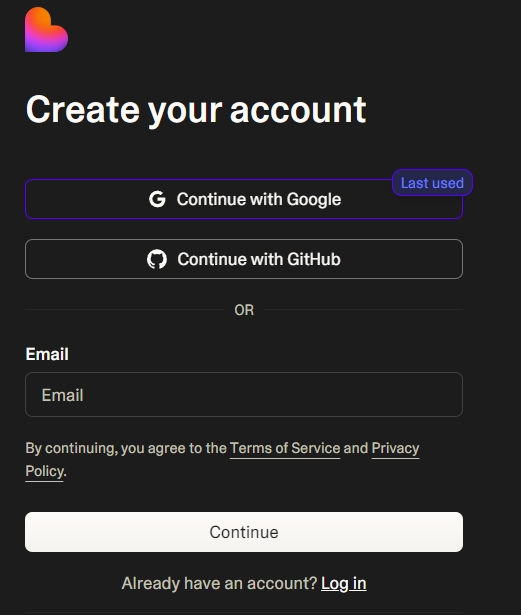
Sign-up requires only an email address or GitHub account. No credit card is needed for the free plan. After verification, you land in the dashboard with 30 credits immediately available. The onboarding flow suggests a first prompt, but you can start with any description.
The first generation is where most free-tier credits disappear. A prompt like "build a SaaS dashboard with user authentication, Stripe billing, and an admin panel" might consume 12-15 credits in one go. Breaking work into smaller prompts — "create the landing page," then "add authentication," then "build the dashboard" — spreads credit usage but increases total consumption because each prompt re-establishes context.
- Start with a minimal viable prompt to test the platform
- Save complex multi-feature requests for when you have credit buffer
- Use the chat for questions instead of regeneration when possible
- Deploy only when you have a working version to show
Templates and the Free Tier
Lovable offers a template gallery with pre-built starting points for common app types — SaaS, marketplace, dashboard, landing page, blog. Using a template still consumes credits because the AI adapts it to your prompt. However, templates typically require fewer credits than generating from scratch since structure and boilerplate already exist.

The template approach works well for learning. You can examine generated code patterns without spending credits on basic setup. But for a unique product idea, templates often require enough modification that the credit savings are marginal. The platform does not currently offer a "template only" mode that skips AI generation entirely.
Supabase Integration on Free Plan
Every Lovable project connects to a Supabase project for database, authentication, and storage. On the free tier, you get one Supabase project linked to your Lovable account. The platform provisions this automatically during first generation. You cannot connect an existing Supabase project on the free plan — only the auto-created one.
- Auto-provisioned Supabase project per Lovable account
- Cannot bring your own Supabase project
- Database schema managed through Lovable prompts
- Direct Supabase dashboard access available for advanced users
- Row-level security policies generated automatically
This integration is a double-edged sword. It removes infrastructure complexity but creates vendor lock-in. If you exceed free-tier limits and want to migrate, you must export the Supabase database and rewrite the frontend to work without Lovable's generated hooks. The generated code is standard React and TypeScript, so migration is possible but not trivial.
The free tier teaches you the platform's patterns. The paid tiers let you actually ship with them.
Common Free-Tier Workflows That Work
Despite constraints, several workflows fit comfortably within 30 monthly credits. These are the patterns that free users report sustaining month after month.
- Learning and experimentation — one or two small apps per month
- Portfolio pieces — build, deploy, screenshot, then archive
- Proof-of-concept validation — generate core flow, test with users, decide on investment
- Component library exploration — generate UI patterns to study code structure
- Prompt engineering practice — refine prompting technique without deployment costs
The portfolio workflow is particularly viable. Build a project over 2-3 sessions, deploy to the provided preview URL, document it with screenshots and a write-up, then let it sit publicly. Next month, start fresh. The public project remains accessible as a portfolio piece even if you cannot edit it further without credits.
Workflows That Break on Free Tier
Certain development patterns quickly exhaust the free allocation. Recognizing these early saves frustration.
- Iterative client work — each revision round burns credits
- Multi-project experimentation — context switching costs full generation
- Team collaboration — no shared access, no private repos
- Production deployment — custom domains and SSL require paid plan
- Long-running projects — cannot maintain momentum with monthly reset
The monthly reset is the silent killer for long projects. You might have 5 credits left on the 28th, need 8 for a critical fix, and face a choice: wait three days for reset or upgrade. There is no partial credit purchase or daily top-up option.
Promotional Credits and Special Offers
Lovable occasionally runs promotions that grant bonus credits. These have included launch week bonuses, hackathon partnerships, and educational program grants. The most consistent path to extra credits is the referral program, which awards credits when referred users upgrade to paid plans. Free-to-free referrals do not generate credits.

Gift cards and coupon codes exist but are distributed through specific channels — conference swag, partner newsletters, or influencer collaborations. There is no public coupon code repository. The platform does not offer student discounts or non-profit pricing as of early 2025, though the enterprise sales team handles custom arrangements for educational institutions.
Comparing Free Tiers Across AI App Builders
Lovable's credit model differs meaningfully from competitors. Understanding the alternatives helps you choose the right tool for your constraint profile.
Scroll horizontally to see all columns
| Platform | Free Model | Monthly Limit | Private Projects | Best For |
|---|---|---|---|---|
| Lovable.dev | Credits | 30 credits | No | Full-stack React + Supabase |
| Bolt.new | Daily messages | ~100 messages/day | Yes | Rapid prototyping, any stack |
| v0.dev | Generations | 20 generations/mo | Yes | UI components, React/Next.js |
| Replit Agent | Cycles | Limited cycles | Yes | Full dev environment |
| Cursor | Free tier | Unlimited (local) | Yes | Code editing with AI |
Bolt.new and v0.dev allow private projects on free tiers, which is a major advantage for proprietary work. However, they lack Lovable's integrated Supabase provisioning and deployment pipeline. Cursor's free tier is fundamentally different — it's an IDE plugin, not a hosted builder. The comparison depends entirely on whether you need the backend integration or just frontend generation.
If you need a database and auth wired automatically, Lovable's free tier is unique. If you just need React components, v0 gives you more privacy for free.
Exporting and Owning Your Free-Tier Code
A critical question for any platform: can you leave? On the free tier, you can download the complete project as a ZIP file or sync to GitHub (read-only sync becomes full sync if you upgrade temporarily). The exported code is a standard Vite + React + TypeScript project with Supabase client configuration. No proprietary runtime or vendor-specific framework locks you in.
- Full source code export available anytime
- GitHub sync requires paid plan for push access
- Supabase project remains yours — export database separately
- No license restrictions on generated code
- Package.json includes standard dependencies only
This portability is a genuine strength. You can build on the free tier, export when credits run out, and continue development locally with Cursor or Copilot. The Supabase project continues functioning independently. You lose the AI generation convenience but keep the application.
When to Upgrade from Free
The upgrade decision usually comes down to three triggers. None are arbitrary — each represents a real workflow blocker.
- Need private projects for client work or proprietary ideas
- Require custom domain for stakeholder demos or production
- Monthly credit needs consistently exceed 30
The Starter plan at $20/month provides 100 credits, private projects, custom domains, and full GitHub sync. For a solo developer building one product, this is often the logical step. The jump to Launch at $50/month adds team seats and higher credit limits — relevant only when collaboration enters the picture.
Free Tier for Teams and Education
The free tier does not support team workspaces. Each team member needs their own account with separate credit pools. Sharing a single account violates terms of service and creates practical problems — credit consumption accelerates, and Git history becomes meaningless. For classroom or workshop settings, instructors typically have students create individual accounts.
- No shared workspaces on any tier below Launch
- Individual accounts required per user
- Educational discounts handled through enterprise sales
- Workshop credits sometimes available via partnership requests
- No bulk account management tools
This limits Lovable's utility for coding bootcamps or team hackathons unless organizers coordinate with sales for temporary credit grants. Competing platforms like Replit have more mature educational programs with classroom management features.
The free tier is designed for individual exploration, not team adoption. That's a deliberate product choice, not an oversight.
Technical Limits Beyond Credits
Credit count is the most visible limit, but several technical constraints affect free-tier projects regardless of credit balance.
- Preview deployments expire after 7 days of inactivity
- Maximum 50 files per project (soft limit, affects generation)
- Supabase free tier limits apply — 500MB database, 1GB file storage
- No custom environment variables on free plan
- Rate limiting on AI API calls during peak hours
The 7-day preview expiration catches many users off guard. A project deployed on Friday becomes inaccessible by the following Friday if untouched. Redeploying costs 1-2 credits. For portfolio pieces, this means either periodic redeployment or accepting that links rot. The Supabase limits are standard for their free tier and independent of Lovable's credit system.
Final Assessment of Lovable Free Plan
The Lovable free tier is a genuine, usable product tier — not a crippled demo. You can build and deploy real applications with authentication, database, and hosting at zero cost. The 30-credit monthly budget supports meaningful learning, portfolio building, and concept validation. It fails for sustained development, private work, or team collaboration. That boundary is clear and consistent. If your use case fits within the constraints, the free tier delivers exceptional value. If it doesn't, the $20 Starter plan removes the most painful limits without a massive price jump. There is no hidden gotcha, no bait-and-switch, and the export path ensures you never lose your work.
Frequently Asked Questions
Can I get more free credits by creating multiple accounts?
Technically possible but violates terms of service. The platform tracks usage patterns and may ban accounts suspected of credit farming. Not recommended for any project you care about.
Do unused free credits roll over to the next month?
No. Credits reset to 30 on the 1st of each calendar month. Any unused credits from the previous month are lost.
Can I use my own Supabase project on the free plan?
No. The free tier only supports the auto-provisioned Supabase project created during your first generation. Bringing your own Supabase project requires a paid plan.
What happens to my deployed apps when free credits run out?
Existing deployments remain accessible for 7 days of inactivity. You cannot make new deployments or edits until credits reset or you upgrade. The Supabase backend continues running independently.
Is there a student or non-profit discount for paid plans?
As of early 2025, no public student or non-profit discount exists. Educational institutions should contact enterprise sales for custom arrangements.
Can I push to GitHub from the free tier?
GitHub sync on free tier is read-only — you can import context from a repo but cannot push changes. Full bidirectional sync requires Starter plan or higher.
How many projects can I have on the free tier simultaneously?
No hard limit on project count, but you are limited to one Supabase project and 30 monthly credits total across all projects. Practical limit is 1-2 active projects.