

AI Development Tools
Lovable Spain: AI App Builder for Spanish Developers
How Spanish founders and developers use Lovable to build production apps without writing code.

Senior Software Developer & Trading Technology Specialist
Ethan Parker is a software developer with over 8 years of experience in building web applications, trading tools, and financial technology solutions. He specializes in Python, JavaScript, API integrations, and trading automation, helping traders improve efficiency through innovative technology.
Lovable has quietly become one of the most talked-about AI app builders among Spanish developers over the past year. The platform lets you describe an application in natural language and watches it generate a working React codebase with TypeScript, Tailwind CSS, and Vite. For teams in Madrid, Barcelona, Valencia, and beyond, the appeal is straightforward: you can go from idea to deployed product in hours instead of weeks, and the generated code is yours to keep, extend, or deploy anywhere.
Contents
- 1. How Lovable Works for Spanish-Speaking Teams
- 2. Pricing and Plans Available in Spain
- 3. Supabase Integration and European Data Residency
- 4. Spanish Community and Learning Resources
- 5. Use Cases from Spanish Founders
- 6. GitHub Workflow and Code Ownership
- 7. Limitations Spanish Teams Should Know
- 8. Comparing Lovable to Alternatives in Spain
- 9. Getting Started from Spain
- 10. Enterprise Adoption in Spanish Companies
- 11. Future Outlook for Lovable in Spain
- 12. Final Assessment of Lovable Spain
What makes Lovable particularly relevant in Spain is not just the technology but the growing ecosystem around it. Spanish-language documentation, community Discord channels, and local meetups have emerged organically. Developers who previously struggled with English-only tooling now have a workflow that feels native. The platform also integrates directly with Supabase for database and authentication, Stripe for payments, and GitHub for version control — services already standard in Spanish startup stacks.
How Lovable Works for Spanish-Speaking Teams
The core loop is simple. You type a prompt in Spanish or English — "una app de gestión de tareas con autenticación y base de datos" or "a task manager with auth and database" — and Lovable generates the project structure, components, database schema, and API routes. You can then refine the output through follow-up prompts, switch to the code editor for manual changes, or push directly to GitHub. The platform uses Claude and GPT models under the hood, but the abstraction means you rarely need to think about model selection.
For Spanish teams, the language flexibility matters. You can prompt in Spanish, get code comments in Spanish, and even generate user-facing copy in Spanish without extra steps. The AI understands context like "IVA" for VAT, "DNI" for national ID formats, and European date conventions. This reduces the back-and-forth that typically happens when non-English teams use AI tools built primarily for English speakers.
The generated stack is opinionated but standard: React 18 with TypeScript, Vite for build tooling, Tailwind CSS for styling, and React Router for navigation. State management uses React Query and Zustand. The backend defaults to Supabase — PostgreSQL, real-time subscriptions, row-level security, and edge functions. This stack aligns with what many Spanish agencies and startups already choose for greenfield projects, which means the code Lovable produces fits into existing CI/CD pipelines and hosting setups without friction.
Pricing and Plans Available in Spain
Lovable offers four tiers that Spanish users can access with standard European payment methods. The Free plan includes 5 credits per day, enough for small experiments and learning the platform. Starter at $20 per month provides 100 credits monthly and removes the daily limit. Launch at $50 per month gives 250 credits and adds custom domains. Scale at $100 per month includes 500 credits, team collaboration, and priority support. Enterprise pricing is custom and includes SSO, audit logs, and dedicated support.
Credits are consumed per generation step. A simple component might cost 1-2 credits; a full authentication flow with database schema could cost 10-15. Most Spanish developers on the Free or Starter plan find they can build several complete MVPs per month before hitting limits. The pricing is in USD, so Spanish users should factor in card foreign transaction fees — typically 1-3% depending on the bank. Some Spanish fintech cards like Revolut or N26 waive these fees.
Scroll horizontally to see all columns
| Plan | Monthly Cost | Credits | Key Features |
|---|---|---|---|
| Free | $0 | 5/day | Basic generation, public projects, community support |
| Starter | $20 | 100/month | No daily limit, private projects, custom domains |
| Launch | $50 | 250/month | Team seats, priority generation, advanced integrations |
| Scale | $100 | 500/month | Multiple teams, SSO, audit logs, dedicated support |
Supabase Integration and European Data Residency
Supabase is the default backend for Lovable projects, and this matters for Spanish companies subject to GDPR. Supabase offers EU regions — specifically Frankfurt and London — which means data can stay within European jurisdiction. When you create a Lovable project and link Supabase, you choose the region during setup. This is not a theoretical benefit; Spanish fintech, healthtech, and edtech startups regularly cite data residency as a hard requirement that rules out many US-only backend services.
The integration is bidirectional. Lovable can create tables, policies, and edge functions in your Supabase project. You can also make changes in the Supabase dashboard — add a column, adjust a policy, write a custom SQL function — and Lovable will detect the schema changes on the next generation cycle. This round-trip capability means Spanish teams don't have to choose between AI speed and database control.
Spanish Community and Learning Resources
The Spanish Lovable community has grown through Discord, Twitter, and local meetups. The official Discord includes a #español channel where developers share prompts, debug generation issues, and post completed projects. Several Spanish YouTubers and technical writers have published tutorials in Spanish covering everything from authentication flows to Stripe subscription integration. The Lovable documentation site includes Spanish translations for core guides, though some advanced pages remain English-only.
In Madrid and Barcelona, informal meetups have started appearing at coworking spaces like Impact Hub and Aticco. These gatherings are typically 20-30 developers showing work-in-progress apps, comparing prompting strategies, and discussing how to hand off Lovable-generated code to traditional development teams. The community is still small compared to React or Vue meetups, but the signal-to-noise ratio is high — most attendees are actively building.

For structured learning, the Lovable Guides section includes step-by-step tutorials for common patterns: SaaS authentication, multi-tenant databases, Stripe checkout, email notifications, and admin dashboards. Each guide shows the prompt sequence, the generated code, and where manual adjustments are typically needed. Spanish developers report that following these guides in order builds intuition for how the AI thinks, which dramatically improves results on custom projects.
Use Cases from Spanish Founders
Spanish founders are using Lovable across a range of product types. A Madrid-based edtech startup built their student portal — authentication, course progress tracking, video player integration, and teacher analytics — in three weeks with two developers. A Barcelona agency uses Lovable to deliver client MVPs in days instead of weeks, then hands off the GitHub repo for long-term maintenance. A Valencia founder built a B2B marketplace for agricultural suppliers with multi-tenancy, Stripe Connect payouts, and document management.
Internal tools are another strong use case. Operations teams at Spanish logistics and e-commerce companies have built admin panels, inventory dashboards, and customer support interfaces without waiting for engineering bandwidth. Because Lovable generates standard React code, these tools can later be extended by developers without a rewrite. The platform also supports GitHub integration, so changes made in the Lovable editor or locally appear in the same repository.
- SaaS MVPs with authentication, subscriptions, and admin panels
- Internal tools for operations, support, and analytics
- Client-facing portals for agencies and consultancies
- Marketplace platforms with multi-tenancy and payments
- Landing pages and marketing sites with CMS integration
- Prototypes for investor demos and user testing
GitHub Workflow and Code Ownership
A common question from Spanish developers is whether they own the code. The answer is yes — Lovable generates code into your GitHub repository, and you have full ownership. The platform creates a standard React project structure with package.json, tsconfig, vite.config.ts, and all source files. You can clone the repo, run npm install and npm run dev locally, and deploy to Vercel, Netlify, AWS, or any static hosting. There is no vendor lock-in at the code level.
The GitHub integration works both ways. You can open the Lovable editor, make changes, and commit to a branch. Or you can make changes locally in VS Code, push to GitHub, and Lovable will sync the changes back into its editor. This means Spanish teams can use Lovable for initial scaffolding and rapid iteration, then switch to traditional development workflows for complex features, code reviews, and long-term maintenance.
Limitations Spanish Teams Should Know
Lovable is not a silver bullet. The AI sometimes generates code that compiles but has logical bugs — incorrect conditional rendering, missing error boundaries, or inefficient database queries. Spanish developers report spending 20-30% of their time reviewing and fixing generated code, especially for complex business logic. The platform also struggles with highly customized design systems; if your company has a strict component library, you will likely need to replace the generated Tailwind components manually.
Credit consumption can be unpredictable. A prompt that seems simple might trigger multiple generation steps, each consuming credits. Teams on the Starter plan sometimes hit the monthly limit mid-project. The workaround is to batch related changes into single prompts and use the code editor for minor tweaks. Enterprise plans include higher limits and rollover credits, but the pricing jump from Scale to Enterprise is significant.
Mobile responsiveness is another area where the AI defaults to desktop-first layouts. You often need to explicitly prompt for mobile breakpoints, touch targets, and responsive navigation. Spanish developers building consumer apps for the Spanish market — where mobile usage exceeds 80% — should budget extra time for mobile polish.
Scroll horizontally to see all columns
| Limitation | Impact | Workaround |
|---|---|---|
| Logical bugs in complex flows | Medium - requires code review | Test each feature, use code editor for fixes |
| Credit unpredictability | High on Starter plan | Batch prompts, use manual edits for small changes |
| Mobile-first gaps | High for consumer apps | Explicit mobile prompts, manual Tailwind adjustments |
| Design system mismatch | Medium for enterprise | Replace generated components with library components |
| Advanced TypeScript patterns | Low - mostly works | Add strict types manually after generation |
Comparing Lovable to Alternatives in Spain
Spanish developers evaluating Lovable typically compare it to Bolt.new, v0.dev, Cursor, and traditional development. Bolt.new runs in the browser with a similar prompt-to-code flow but uses a different stack (Astro, Svelte options) and has less mature Supabase integration. v0.dev from Vercel focuses on UI components rather than full applications and integrates tightly with Vercel hosting. Cursor is an AI-enhanced IDE — powerful for developers who want to write code with AI assistance, but not a no-code tool.
For Spanish teams, the decision often comes down to stack preference and workflow. If you want React + Supabase + GitHub ownership and are comfortable reviewing AI-generated code, Lovable fits. If you prefer Svelte or Astro, Bolt.new may suit better. If you only need UI components for an existing Next.js project, v0.dev is faster. If you are a developer who wants AI pair programming in your editor, Cursor is the choice. Many Spanish teams use multiple tools — Lovable for scaffolding, Cursor for refinement.
Lovable replaced our two-week sprint zero. We now ship day one with auth, database, and deployment pipeline ready.
Getting Started from Spain
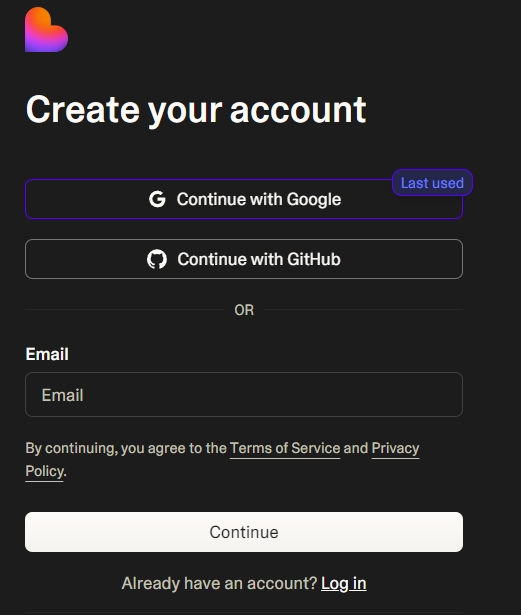
Sign up at lovable.dev using GitHub, Google, or email. The onboarding asks for your experience level and use case — this tailors the initial tutorials. Start with the Free plan to complete the guided tutorial: a todo app with authentication. This takes 15-20 minutes and teaches the prompt-refine-commit loop. Then try building a small real project — a personal portfolio, a client intake form, or a simple dashboard. Use the Spanish Discord channel when stuck; response times are usually under an hour during European business hours.
For teams, the Starter plan is the practical entry point. The 100 monthly credits accommodate 3-4 substantial projects per month. Enable GitHub integration immediately — create a new repository or connect an existing one. Set up Supabase in the EU region during project creation. Configure custom domains on the Launch plan or higher. The entire setup from account creation to first deployment typically takes under an hour for developers familiar with React and Supabase.
Enterprise Adoption in Spanish Companies
Larger Spanish companies — banks, telcos, retailers — are evaluating Lovable for internal tooling and customer-facing prototypes. The Enterprise plan adds SSO (SAML/OIDC), audit logs, private cloud deployment options, and dedicated support. These features matter for procurement and security reviews. Several Spanish enterprises have run pilot programs where non-technical product managers use Lovable to build functional prototypes that developers then productionize. This reduces the specification-to-prototype cycle from weeks to days.
Security reviews typically focus on data handling. Lovable does not store your code, database credentials, or API keys — those remain in your GitHub and Supabase accounts. The platform processes prompts and generates code in its infrastructure, but the generated artifacts are delivered to your repositories. Spanish enterprises should request the SOC 2 report and data processing agreement during vendor assessment. The company is headquartered in Sweden, which simplifies GDPR compliance for EU customers.
Future Outlook for Lovable in Spain
The Spanish market is still early in AI-assisted development adoption. Most developers know about Copilot and ChatGPT, but fewer have integrated full app generation into their workflow. Lovable's Spanish-language improvements — better prompt understanding, localized documentation, community growth — will likely accelerate adoption. The platform's roadmap includes improved mobile generation, better design system integration, and team collaboration features that align with how Spanish agencies and product teams work.
Pricing in USD remains a friction point for some Spanish freelancers and small agencies. A EUR-denominated option or regional pricing would reduce currency risk and card fees. Competitors like Bolt.new and v0.dev face the same issue. As the market matures, expect more flexible billing — possibly credit packs, annual discounts, or educational pricing for Spanish universities and bootcamps. The company has hinted at a student discount program but details remain unannounced.
Frequently Asked Questions
Does Lovable support Spanish language prompts and documentation?
Yes. You can prompt in Spanish, generate Spanish user-facing copy, and access core documentation translated to Spanish. The Discord community has an active #español channel.
Can I keep my data in the EU for GDPR compliance?
Yes. Supabase integration lets you choose EU regions (Frankfurt or London) during project setup. Lovable does not store your database credentials or user data.
Do I own the code Lovable generates?
Yes. All generated code is committed to your GitHub repository. You have full ownership, can deploy anywhere, and there are no runtime dependencies on Lovable.
What is the typical credit usage for a complete MVP?
A typical SaaS MVP with auth, database, payments, and admin panel consumes 50-150 credits depending on complexity. The Starter plan (100 credits/month) covers several small projects.
Can non-technical founders in Spain use Lovable effectively?
Yes, for initial prototyping. Non-technical users can build functional demos, but production apps typically require developer review for security, performance, and edge cases.
How does Lovable compare to Bolt.new or v0.dev for Spanish teams?
Lovable focuses on full React + Supabase applications with GitHub ownership. Bolt.new offers more framework choices. v0.dev specializes in UI components for Next.js. Many teams use multiple tools.
Is there Spanish-language support or community?
The Discord #español channel is active. Several Spanish YouTubers publish tutorials. Official documentation has Spanish translations for core guides. Local meetups occur in Madrid and Barcelona.
Final Assessment of Lovable Spain
Lovable has earned its place in the Spanish developer toolkit. The combination of Spanish-language support, EU data residency via Supabase, GitHub code ownership, and a stack that matches local preferences makes it a practical choice for founders, agencies, and internal teams. The Free and Starter plans are accessible enough for experimentation, while Enterprise features address compliance needs of larger organizations. The main friction points — credit unpredictability, mobile responsiveness gaps, and USD pricing — are manageable with experience and planning.
For Spanish developers considering adoption, the recommendation is straightforward: spend an afternoon on the Free plan building a real project you understand well. The learning curve is not the technology but the prompting discipline — learning what the AI handles reliably versus what needs manual intervention. Once that intuition develops, Lovable becomes a genuine accelerator rather than a novelty. The Spanish community is still growing, but the foundation is solid enough that early adopters gain a real workflow advantage.