

AI Development Tools
Lovable Netherlands: AI App Builder for Dutch Developers
A practical guide to using Lovable in the Netherlands for building production-ready applications

Senior Software Developer & Trading Technology Specialist
Ethan Parker is a software developer with over 8 years of experience in building web applications, trading tools, and financial technology solutions. He specializes in Python, JavaScript, API integrations, and trading automation, helping traders improve efficiency through innovative technology.
Lovable has quickly become one of the most talked-about AI app builders in Europe, and the Netherlands is no exception. Dutch developers, founders, and product teams are adopting it to move from idea to deployed application in hours rather than weeks. The platform generates React, TypeScript, and Tailwind CSS code backed by Supabase for database, authentication, and hosting. What makes it relevant for the Dutch market specifically is the combination of European data residency, GDPR-aligned infrastructure, and a pricing model that works for both solo builders and growing teams.
Contents
- 1. What Is Lovable and Why It Matters in the Netherlands
- 2. Getting Started with Lovable in the Dutch Market
- 3. Lovable Pricing for Dutch Users
- 4. Building with Supabase Integration
- 5. GitHub Workflow for Dutch Development Teams
- 6. Templates and Starters for Dutch SaaS Projects
- 7. Security and Compliance for European Users
- 8. Community and Support in the Netherlands
- 9. Lovable for Dutch Founders and Non-Technical Builders
- 10. Comparing Lovable to Alternatives in Europe
- 11. Practical Tips for Dutch Teams Using Lovable
- 12. Final Assessment of Lovable Netherlands
The Netherlands has a dense startup ecosystem centered around Amsterdam, Eindhoven, Rotterdam, and Utrecht. Technical talent is expensive, and the pressure to ship fast is constant. Lovable addresses this by letting developers describe features in natural language and watching production-ready code appear. The platform does not replace developers — it changes what they spend time on. Instead of writing boilerplate authentication flows or CRUD interfaces, teams focus on business logic, user experience, and the decisions that actually differentiate their product.
This article walks through how Lovable works in practice for Dutch users. It covers pricing in euros, VAT handling, Supabase region selection, community resources in Dutch and English, and the practical realities of building with AI-generated code. Whether you are a freelancer in Amsterdam building client projects, a founder in Eindhoven validating a SaaS idea, or a product manager in Rotterdam prototyping internal tools, the details below should help you decide if Lovable fits your workflow.
What Is Lovable and Why It Matters in the Netherlands
Lovable is an AI-powered application builder that turns natural language prompts into full-stack web applications. You describe what you want — a dashboard with user roles, a marketplace with Stripe payments, a CRM with email automation — and the platform generates a React codebase with TypeScript, Tailwind CSS, and a Supabase backend. The code is yours. You can download it, push it to GitHub, deploy it on Vercel or Netlify, or host it on Lovable's own infrastructure. For Dutch teams, the key differentiator is that Supabase offers EU regions (Frankfurt and London), which keeps data within European jurisdiction. This matters for GDPR compliance and for clients who require data residency in the EU.
The platform launched broadly in 2024 and gained traction quickly because it solves a real bottleneck: the gap between a product specification and a working prototype. Traditional no-code tools like Bubble or Webflow lock you into their ecosystem. Lovable generates standard React code that any developer can read, modify, and maintain. This is especially valuable in the Netherlands where many companies work with external agencies or freelancers. The code handoff is clean — there is no proprietary runtime to explain.
- Generates React 18, TypeScript 5, Tailwind CSS 3, Vite 5 projects
- Supabase backend: PostgreSQL, Auth, Realtime, Edge Functions, Storage
- GitHub integration with two-way sync — edit locally or in the browser
- One-click deploy to Lovable hosting, Vercel, Netlify, or custom domains
- EU data regions available (Frankfurt, London) for GDPR compliance
- Team collaboration with role-based access and shared projects
The code is standard React. Any Dutch developer can pick it up on day one without learning a proprietary framework.
Getting Started with Lovable in the Dutch Market
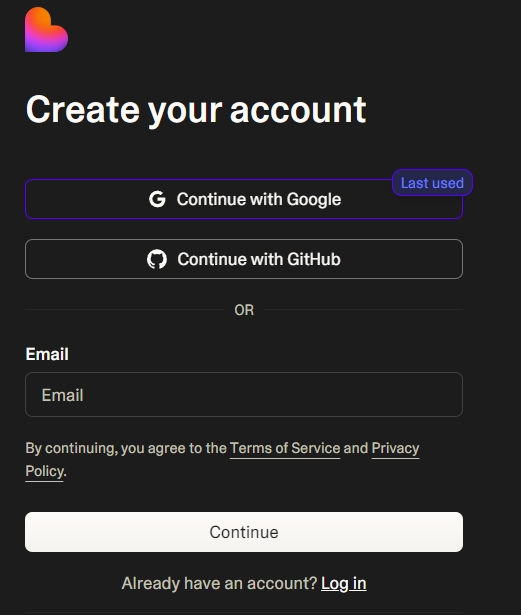
Signing up from the Netherlands is straightforward. You can use GitHub, Google, or email authentication. The onboarding asks about your role — developer, founder, designer, product manager — and tailors the initial templates accordingly. Dutch users will notice the interface is in English only, but the community Discord has an active Dutch-language channel where builders share tips, troubleshoot Supabase RLS policies, and discuss local hosting preferences. The platform accepts major credit cards and processes payments in USD, which means your bank or card issuer handles the EUR conversion. There is no local Dutch payment method like iDEAL yet, though the team has acknowledged European payment preferences in public roadmap discussions.
After signup, you land in the project dashboard. The free tier gives you 5 projects and 50 AI messages per day — enough to build and deploy a functional MVP. The editor splits into a chat pane on the left and a live preview on the right. You type requests like "add a user dashboard with role-based navigation" and watch the file tree update in real time. The generated code follows modern React patterns: hooks for state, context for auth, TanStack Query for server state. For Dutch developers used to writing this by hand, the output is surprisingly clean. It uses proper TypeScript interfaces, separates API routes from UI components, and respects Supabase row-level security.
One practical note: the AI works best when you treat it like a senior pair programmer rather than a magic box. Break features into small, specific prompts. Instead of "build a SaaS billing system," try "create a Stripe checkout session endpoint for the Pro plan" followed by "add a webhook handler for subscription.created events." The platform maintains context across the conversation, so iterative prompting works well. Dutch teams adopting this often assign one person to drive the AI while another reviews the generated diffs in GitHub — a workflow that fits naturally into existing code review practices.
Lovable Pricing for Dutch Users
Pricing is in USD, but the effective cost in euros depends on your card's exchange rate and any foreign transaction fees. As of early 2025, the tiers are: Free (5 projects, 50 messages/day), Pro at $25/month (unlimited projects, 250 messages/day, priority support), Team at $59/month per seat (shared workspaces, SSO, audit logs), and Enterprise with custom pricing (dedicated support, SLA, on-premise options). For Dutch freelancers and small agencies, the Pro tier is the sweet spot. At roughly €23-24/month depending on exchange rates, it compares favorably to hiring a junior developer for even a few hours. Teams in Amsterdam and Utrecht running multiple client projects often put the cost on a company card and expense it as a software subscription.
VAT handling is important for Dutch businesses. Lovable appears to be a US-based service, so the reverse charge mechanism applies for B2B transactions. You account for Dutch VAT (21%) in your own VAT return rather than paying it to Lovable. Make sure your company VAT number is on file if you need a proper invoice for tax purposes. The billing portal lets you download receipts, but they may not meet all Dutch tax authority requirements for input VAT deduction. Some Dutch accountants recommend requesting a formal invoice from support if the automatic receipt is insufficient.
Scroll horizontally to see all columns
| Tier | Monthly (USD) | Approx. EUR | Best For |
|---|---|---|---|
| Free | $0 | €0 | Learning, small prototypes |
| Pro | $25 | €23-24 | Freelancers, solo founders |
| Team | $59/seat | €54-56/seat | Agencies, product teams |
| Enterprise | Custom | Custom | Large orgs, compliance needs |
The message limits are generous for most workflows. A typical feature — say, adding a settings page with profile avatar upload, notification preferences, and password change — takes 5-15 messages depending on complexity. The Pro tier's 250 messages per day translates to roughly 15-20 substantial features daily, which is more than most solo builders need. Team tier adds shared workspaces and SSO (SAML/OIDC), which matters for Dutch companies using Microsoft Entra ID or Google Workspace for identity management. Enterprise includes data processing agreements (DPAs) and the option to run in a dedicated Supabase cluster — relevant for fintech, healthtech, or government-adjacent projects in the Netherlands.

There is also a student discount program (50% off Pro) and an affiliate program that pays 30% recurring commission. Dutch computer science students at TU Delft, University of Amsterdam, or Eindhoven University of Technology can verify their .edu email for the discount. The affiliate program works well for Dutch tech bloggers, YouTubers, and course creators who teach React or Supabase — several have built meaningful recurring revenue by recommending Lovable in their content.
Building with Supabase Integration
Supabase is the backbone of every Lovable project. When you create a new project, Lovable provisions a Supabase project automatically — or you can connect an existing one. For Dutch users, the region choice matters. Frankfurt (eu-central-1) is the closest AWS region and offers the lowest latency for users in the Netherlands. London (eu-west-2) is the alternative. Both are in the EU, but Frankfurt keeps data in Germany, which some Dutch clients prefer for contractual reasons. You select the region during project creation in the Lovable dashboard, and it cannot be changed later without migrating the database.
The integration handles authentication, database, realtime subscriptions, edge functions, and storage out of the box. Lovable generates the Supabase client configuration, TypeScript types from the database schema, and React hooks for common operations. Row-level security (RLS) policies are created automatically based on your prompts — for example, "users can only see their own orders" generates the appropriate policy. You can inspect and modify these in the Supabase dashboard directly. This two-way relationship is important: changes made in Supabase (new columns, indexes, policies) are reflected in Lovable's type generation on the next sync.
- Auth: Email/password, magic links, OAuth (Google, GitHub, Microsoft, Apple)
- Database: Full PostgreSQL with extensions (PostGIS, pgvector, pg_cron)
- Realtime: Subscribe to database changes via WebSocket
- Edge Functions: Deno-based serverless functions deployed globally
- Storage: S3-compatible file storage with CDN and signed URLs
- Vector: pgvector for embeddings and similarity search
A common pattern for Dutch SaaS builders: use Lovable to scaffold the admin dashboard, marketing pages, and user-facing features, then write custom Edge Functions for complex business logic like Dutch VAT calculations, iDEAL payment webhooks, or integration with the Dutch Chamber of Commerce (KvK) API. The generated code includes a supabase/functions directory structure, so adding a Deno function is as simple as creating a file. Lovable's AI can help write the function code, but you will want to test it locally with the Supabase CLI before deploying.
GitHub Workflow for Dutch Development Teams
The GitHub integration is two-way. Connect a repository (public or private) and Lovable pushes commits on every save. You can also pull changes made locally — if a developer adds a custom hook or fixes a TypeScript error in VS Code, Lovable detects the changes and updates its internal state. This means Dutch teams can use their existing workflow: feature branches, pull requests, code reviews, CI/CD pipelines. The AI-generated code lives in the same repo as hand-written code. There is no lock-in. If you decide to stop using Lovable, the repository remains a standard Vite + React + Supabase project that any developer can run with npm install and npm run dev.
For agencies in Amsterdam or Rotterdam managing multiple client projects, the recommended pattern is one GitHub organization per client, with Lovable connected to each repo. Team members get access through GitHub teams. The Pro and Team tiers support multiple GitHub accounts, so you can switch contexts cleanly. CI/CD is straightforward — most Dutch teams use Vercel or Netlify connected to the main branch for preview deployments, with production on a separate branch or via manual promotion. Lovable's own hosting is an option for quick demos, but for client work, deploying to the client's Vercel/Netlify account under their custom domain is more professional.
Scroll horizontally to see all columns
| Step | Tool | Purpose |
|---|---|---|
| 1. Create repo | GitHub | Client org, private repo, branch protection |
| 2. Connect Lovable | Lovable dashboard | Link repo, select main branch |
| 3. Build features | Lovable editor | AI generates code, auto-commits on save |
| 4. Review locally | VS Code / GitHub PR | Devs review diffs, add custom code |
| 5. Deploy preview | Vercel / Netlify | Auto-deploy PR branches for client review |
| 6. Merge to main | GitHub | Triggers production deployment |
One friction point: Lovable commits directly to the connected branch (usually main) by default. For teams with strict branch protection rules, this can fail. The workaround is to connect Lovable to a dedicated branch (e.g., lovable-sync) and use a GitHub Action to create a PR to main on every push. Several Dutch teams have shared this pattern in the community Discord. It adds a review gate without slowing down the AI iteration loop.
Templates and Starters for Dutch SaaS Projects
Lovable provides a template library accessible from the dashboard. Categories include SaaS, Marketplace, Dashboard, Landing Page, CRM, E-commerce, and Internal Tools. Each template is a complete starter project with authentication, database schema, and core UI. For Dutch builders, the SaaS template is the most used — it includes Stripe subscriptions, team workspaces, role-based access, and an admin panel. The Marketplace template adds listing management, search, and transaction flows. The Internal Tools template is popular with product managers at Dutch scale-ups who need admin panels, feature flag interfaces, or customer support dashboards without waiting for engineering bandwidth.
Templates are not rigid. You can start from a blank project and ask the AI to "build a SaaS starter with Stripe and teams" and get a similar result. The advantage of templates is speed — they are pre-tested and deploy immediately. The disadvantage is that you inherit design decisions (color scheme, component structure) that you may want to change. Most experienced Dutch developers start from a template for the first project to learn the patterns, then switch to blank projects with custom prompts for subsequent work.

The community also shares templates. The Discord #templates channel has Dutch builders posting specialized starters: a KvK company lookup integration, a Dutch address autocomplete using PostNL API, a GDPR cookie consent banner component, and a Mollie/iDEAL payment flow. These are not official Lovable templates but copy-pasteable project exports. The ecosystem is still young, so expect to build some Dutch-specific integrations yourself. The good news: because the code is standard React, any npm package works. You can install @postnl/api, mollie-api-node, or kvk-api-client and use them in Edge Functions or client-side code.
Security and Compliance for European Users
Security is a frequent topic in Dutch procurement conversations. Lovable's architecture inherits Supabase's security posture: SOC 2 Type II, ISO 27001, GDPR compliance, and HIPAA eligibility on Enterprise plans. Data in Frankfurt or London regions never leaves the EU. Encryption at rest (AES-256) and in transit (TLS 1.3) are standard. Supabase provides a Data Processing Agreement (DPA) that covers GDPR Article 28 requirements. For Dutch companies processing personal data, this DPA is essential — you need it signed before using the service for production workloads. The Team and Enterprise tiers include the DPA; Free and Pro users should request it from support if required.
Row-level security (RLS) is the primary access control mechanism. Lovable generates policies automatically, but you must verify them. A common mistake: assuming "users can only see their own data" works for all tables. In practice, you need policies on every table, including join tables and audit logs. The Supabase dashboard has a policy editor with a visual builder and SQL view. Dutch developers comfortable with PostgreSQL often write policies directly in SQL for complex scenarios like "managers can see their team's data but not other teams" or "support agents can see tickets assigned to them or unassigned tickets."
- SOC 2 Type II, ISO 27001 certified (Supabase)
- GDPR DPA available on Team and Enterprise tiers
- EU data regions: Frankfurt, London
- Encryption at rest (AES-256) and in transit (TLS 1.3)
- RLS policies generated and editable
- Audit logs on Team and Enterprise plans
- SSO (SAML/OIDC) on Team and Enterprise
For Dutch government or healthcare projects, additional certifications may be required (NEN 7510 for healthcare, ISO 27001 for government). Supabase's certifications cover the infrastructure layer, but your application code and data handling practices are your responsibility. Lovable does not audit your generated code. If you need a formal security assessment, engage a Dutch security firm (there are several in Amsterdam and The Hague specializing in SaaS assessments) to review the deployed application, not the AI generator.
The DPA is on Team and Enterprise. If you are a Dutch agency building for clients, factor this into your tier choice.
Community and Support in the Netherlands
The Lovable community is global but has a visible Dutch presence. The official Discord has a #nederlands channel with several hundred members — developers, founders, students, and agency folks. Questions range from "how do I add iDEAL?" to "best way to handle Dutch VAT in Stripe?" to "anyone hiring Lovable developers in Amsterdam?" The channel is active during European business hours. There are also informal meetups organized by community members in Amsterdam and Eindhoven, usually announced in Discord. Lovable's team occasionally joins for AMAs.
Support tiers differ by plan. Free users get community support (Discord, documentation, GitHub issues). Pro users get priority email support with ~24 hour response. Team users get dedicated Slack connect channel. Enterprise gets a named customer success manager and SLA. For Dutch teams, the time zone alignment with the support team (US-based) means evening responses are common. This is manageable for non-blocking issues but worth noting if you need same-day resolution during Dutch business hours. The documentation is comprehensive and includes guides on Supabase integration, GitHub sync, custom domains, and deployment — all in English.

There is a growing body of Dutch-language content on YouTube and blogs. Search "Lovable Nederland" or "Lovable tutorial Nederlands" to find walkthroughs by Dutch creators. Some are affiliated with the affiliate program, so factor that in when evaluating recommendations. The official Lovable YouTube channel has English tutorials with auto-generated Dutch subtitles that are surprisingly accurate for technical content. For teams onboarding junior developers, these videos are a decent supplement to pair programming sessions.
Lovable for Dutch Founders and Non-Technical Builders
A significant portion of Lovable's Dutch user base are non-technical founders — product managers, designers, marketers, and business people building their own MVPs. The platform markets heavily to this group with dedicated landing pages for founders, product managers, designers, and marketers. The promise: describe your idea, get a working app. The reality: you can get remarkably far without writing code, but you will hit walls where technical knowledge is required. Database migrations, Edge Function debugging, TypeScript errors, and deployment configuration often need a developer's touch.
For Dutch founders validating ideas, the typical path is: use the Free tier to build a clickable prototype, show it to potential customers, then either hire a freelance developer to productionize it or upgrade to Pro and learn enough to ship it yourself. Several Dutch founders in the community have shared stories of building their SaaS MVP in 2-3 weeks of evenings and weekends, then raising pre-seed from Dutch angels (Keen Venture Partners, FORWARD.one, Curiosity VC) with a working product rather than slides. The code quality is good enough for early-stage investment due diligence — investors can see a real React/Supabase codebase, not a no-code black box.
The platform includes a "Guides" section with role-specific tutorials. The Founders guide covers idea validation, pricing page design, and launch checklists. The Product Managers guide focuses on prototyping, stakeholder demos, and handoff to engineering. The Designers guide covers Figma integration (import designs, generate components) and design system setup. These are genuinely useful — not marketing fluff — and reflect the team's understanding of how different roles actually use the tool.
Comparing Lovable to Alternatives in Europe
The main alternatives Dutch teams evaluate are Bolt.new, v0.dev, Replit Agent, and Cursor. Each has a different positioning. Bolt.new (by StackBlitz) runs in the browser with WebContainer technology — impressive for quick prototypes but less suited for production Supabase apps. v0.dev (by Vercel) generates React components from shadcn/ui but does not include backend or database. Replit Agent is a full coding agent in a cloud IDE — powerful but more developer-oriented. Cursor is an AI-enhanced IDE — you write code with AI assistance rather than prompting for whole features. Lovable sits in the middle: higher-level than Cursor, more production-ready than Bolt or v0, more accessible than Replit Agent for non-developers.
Scroll horizontally to see all columns
| Tool | Backend Included | Code Ownership | Best For | EU Data Regions |
|---|---|---|---|---|
| Lovable | Yes (Supabase) | Full | Full-stack apps, teams | Yes (Frankfurt, London) |
| Bolt.new | Limited | Full | Quick prototypes, demos | No |
| v0.dev | No | Full | UI components, landing pages | Vercel regions |
| Replit Agent | Yes (Replit DB/Postgres) | Full | Developer workflows | US primarily |
| Cursor | Bring your own | Full | AI-assisted coding | Depends on your stack |
For Dutch agencies, the code ownership and GitHub sync are often the deciding factors. Bolt and v0 generate code you can copy, but the iteration loop is manual. Lovable's two-way GitHub sync means the AI and human developers work on the same codebase continuously. Replit Agent has GitHub integration but the workflow is more IDE-centric. Cursor is excellent for developers who want to stay in their editor — many Dutch developers use Cursor alongside Lovable: Lovable for scaffolding and large features, Cursor for fine-grained editing and debugging.
Lovable is not a Cursor replacement. They solve different problems. Use both.
Practical Tips for Dutch Teams Using Lovable
After watching Dutch teams adopt Lovable over the past year, several patterns emerge. First: invest in a good prompt library. Save your successful prompts as snippets — "create a data table with sorting, filtering, and pagination using TanStack Table" or "add a file upload component with drag-drop, progress, and Supabase Storage." Share these across the team. Second: use the Supabase CLI locally. Run supabase start for a local stack, supabase db diff to generate migrations, supabase functions serve to test Edge Functions. The AI generates code that works in the cloud, but local development catches TypeScript errors and policy issues faster.
Third: set up a shared component library early. Lovable generates components inline (in the feature folder). For consistency across projects, extract common patterns — Button, Input, Card, Table, Modal — into a shared package or at least a components/ui folder with consistent props. Dutch teams building multiple client projects report 30-40% faster delivery after standardizing this. Fourth: monitor your Supabase usage. The free Supabase tier (included with Lovable Free) has limits: 500MB database, 1GB bandwidth, 2M Realtime messages. A production SaaS with Dutch users will exceed this quickly. Plan to upgrade Supabase separately (Pro plan is $25/month) or use the Team/Enterprise Lovable tiers which include higher Supabase limits.
- Build a team prompt library for common patterns
- Use Supabase CLI for local development and migrations
- Extract a shared UI component library across projects
- Monitor Supabase usage — free tier is tight for production
- Set up GitHub branch protection with PR reviews
- Use Vercel/Netlify preview deployments for client demos
- Request DPA early if building for EU clients
- Test Edge Functions locally before deploying
Fifth: Dutch clients often ask for custom domains and white-labeling. Lovable supports custom domains on all paid tiers. The setup is standard: add the domain in Lovable, configure DNS (A record for apex, CNAME for www), SSL provisions automatically via Let's Encrypt. For white-labeling (removing Lovable branding), you need Team or Enterprise. The Free and Pro tiers show a small "Powered by Lovable" badge on hosted projects. Most Dutch agencies on Pro tier deploy to client's Vercel/Netlify instead, which avoids the badge entirely and gives the client full control.
Final Assessment of Lovable Netherlands
Lovable works well for Dutch developers and teams who want to move fast without sacrificing code quality or ownership. The Supabase integration with EU regions solves the data residency question. The GitHub sync fits existing workflows. The pricing is reasonable for the Dutch market — Pro at ~€24/month is a fraction of a senior developer's daily rate. The community is active enough to unblock common issues, and the Dutch-language Discord channel helps with local specifics like iDEAL, KvK, and VAT.
The gaps are real but manageable. No iDEAL payment method for the subscription itself. No Dutch-language UI (English only). Support hours favor US time zones. The Free tier's Supabase limits are too low for any production workload. Non-technical founders will hit a ceiling where developer help is needed. But these are not dealbreakers — they are the normal friction of adopting a new tool in a specific market. The core value proposition holds: you describe features in natural language, get production-ready React and Supabase code, and deploy it on infrastructure you control.
For a Dutch freelancer building client projects, the ROI is clear: one Pro subscription pays for itself on the first project. For a startup team in Amsterdam or Eindhoven, it compresses the MVP timeline from months to weeks. For a product manager at a scale-up in Rotterdam, it turns internal tool requests from a quarterly planning item into a same-day delivery. The technology is mature enough for production use. The question is not whether it works — it's whether your team is ready to integrate AI-generated code into your process. If you treat it as a force multiplier for developers rather than a replacement, the answer is likely yes.
Frequently Asked Questions
Does Lovable support iDEAL payments for the subscription?
Not currently. Subscriptions are billed in USD via credit card. Your bank handles EUR conversion. The team has acknowledged European payment preferences but no timeline for iDEAL support has been announced.
Can I use Lovable for a Dutch government project requiring NEN 7510?
Supabase has ISO 27001 and SOC 2, but NEN 7510 certification is specific to Dutch healthcare. You would need to engage a Dutch auditor to assess the full application stack. Lovable does not provide compliance guarantees beyond the infrastructure layer.
Is the generated code suitable for Dutch investors' technical due diligence?
Yes. The codebase is standard React 18, TypeScript 5, Vite 5, Tailwind 3 with Supabase. Investors can clone the repo, run npm install, and review architecture. Several Dutch founders have raised pre-seed with Lovable-built MVPs.
How do I handle Dutch VAT calculations in a Lovable app?
Build a Supabase Edge Function (Deno) that validates VAT numbers via the EU VIES API and calculates Dutch VAT (21% standard, 9% reduced). The AI can scaffold this, but you should test edge cases (intra-community supply, reverse charge) with a tax advisor.
Can I deploy a Lovable project to a Dutch hosting provider like TransIP or Hostnet?
You can export the code and deploy anywhere that supports Node.js or static hosting. However, the Supabase backend remains on Supabase's infrastructure (AWS Frankfurt/London). For fully Dutch-hosted stack, you would need to self-host Supabase (possible but complex) or use a different backend.
Does Lovable have a Dutch-language interface or documentation?
No. The UI, documentation, and support are English only. The community Discord has an active #nederlands channel for peer support in Dutch.
What is the typical learning curve for a Dutch developer new to Lovable?
Experienced React/TypeScript developers are productive in 2-4 hours. The mental model shift is learning to prompt effectively rather than writing every line. Non-technical founders need 1-2 weeks of part-time use to build a functional MVP, often with developer help for the last 20%.